 amberline
Nursery Certificate Tracking: How to Stay Ofsted-Ready All Year
Nursery managers know the feeling. An Ofsted inspector arrives and asks to see staff certificates. You're 90% sure everything is current — but that 10% doubt is enough to make your stomach drop.
The truth is, tracking certificates across a team of nursery staff is genuinely hard. Each person holds multiple qualifications with different renewal cycles, and one lapse can trigger a compliance finding.
The certificates every nursery tracks
A typical nursery staff member holds at least four key certificates:
Enhanced DBS check
DBS certificates don't have a formal expiry date. But Ofsted expects nurseries to re-check staff on a rolling basis — typically every 3 years. Some local authorities and insurance providers require it even more frequently.
The problem? Because there's no hard expiry date printed on the certificate, DBS renewals are the easiest to forget. You need to set your own renewal schedule and stick to it.
Paediatric First Aid
Valid for 3 years. At least one staff member with a current paediatric first aid certificate must be on-site at all times during operating hours. If your first-aider's certificate lapses, you have a ratio problem — and a safeguarding risk.
Safeguarding Level 2
Typically renewed every 2–3 years, though some local safeguarding boards recommend annual refreshers. All staff who work directly with children need this, not just the designated safeguarding lead.
Food Hygiene Level 2
Valid for 3 years. Required for anyone involved in preparing or handling food for the children. If your nursery serves meals and snacks — and most do — you need at least one qualified staff member at all times.
Why nursery certificate tracking is harder than it looks
The maths is simple but unforgiving. A nursery with 8 staff members, each holding 4 certificates, means you're tracking 32 expiry dates — all on different renewal cycles.
Some certificates expire every 2 years. Others every 3. DBS checks run on whatever schedule you've set internally. There's no single renewal date to remember because they're all staggered.
This is exactly the scenario where spreadsheets break down. You add a row per person, columns for each certificate type, and within 6 months nobody is updating it consistently.
What Ofsted actually checks
Ofsted inspectors will look at three things related to staff certificates:
- Are all required certificates current? Not "were they current last month" — are they current right now, today.
- Can you evidence them? You need to produce the actual certificates or proof of qualification on request.
- Do you have a system for tracking renewals? Inspectors want to see that you're proactive, not reactive. A clear tracking system demonstrates good management practice.
A traffic-light dashboard showing every staff member's certificate status — red for expired, amber for expiring soon, green for valid — is exactly the kind of at-a-glance evidence that satisfies point 3.
Tracking certificates by staff member
The most natural way to track nursery certificates is by person. You want to see "Sarah — all green" or "James — amber on First Aid" at a glance, not scroll through a flat list of 32 certificates trying to figure out who needs what.
Amberline's Holders view groups certificates by the person they belong to. Each staff member appears as a card showing their worst-status certificate, so you can spot problems without opening anything.
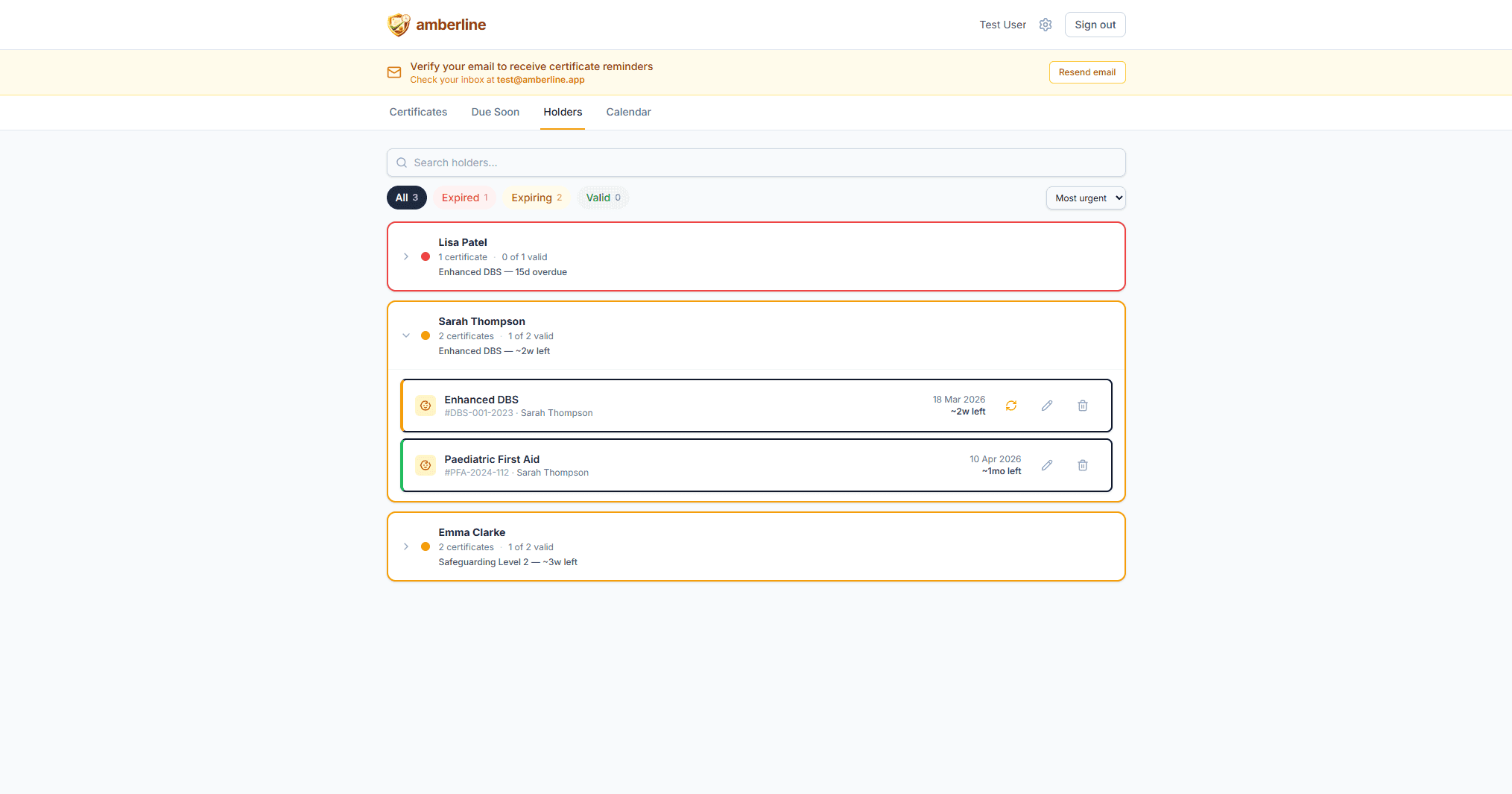
Tap any person to expand their card and see all their certificates with individual status indicators.
Setting up your nursery certificates
Adding certificates takes seconds. Pick from the childcare template list — DBS Check, Paediatric First Aid, Safeguarding Level 2, Food Hygiene Level 2 — enter the staff member's name and expiry date, and you're done.
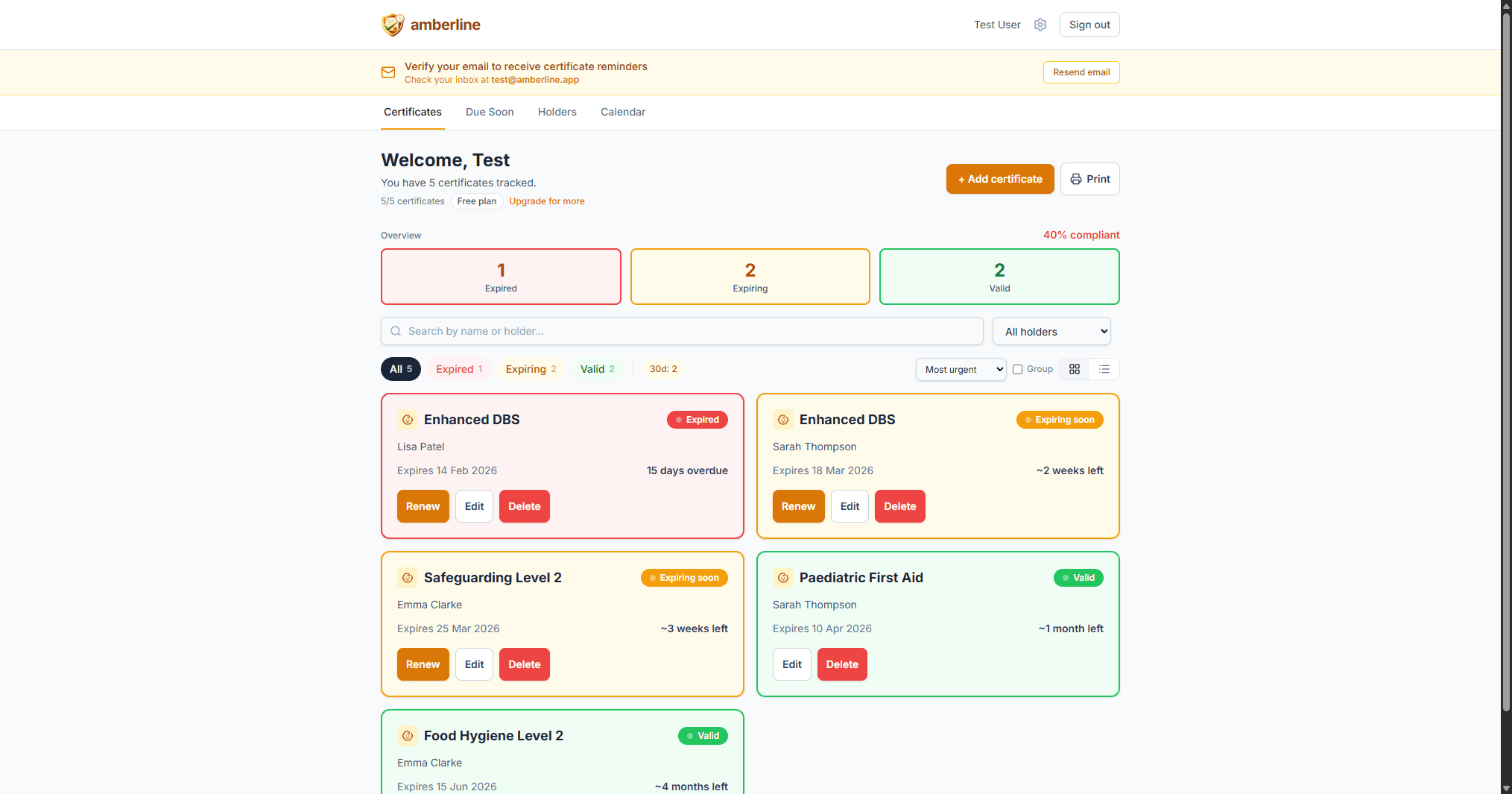
For DBS checks with no printed expiry, enter the date 3 years from the check date (or whatever your internal policy dictates). Amberline will remind you when it's time to re-check.
Automatic reminders do the chasing
Once your certificates are in, the reminders handle the rest. You'll receive email alerts at 90, 30, and 7 days before each certificate expires — and a final alert on the expiry date itself.
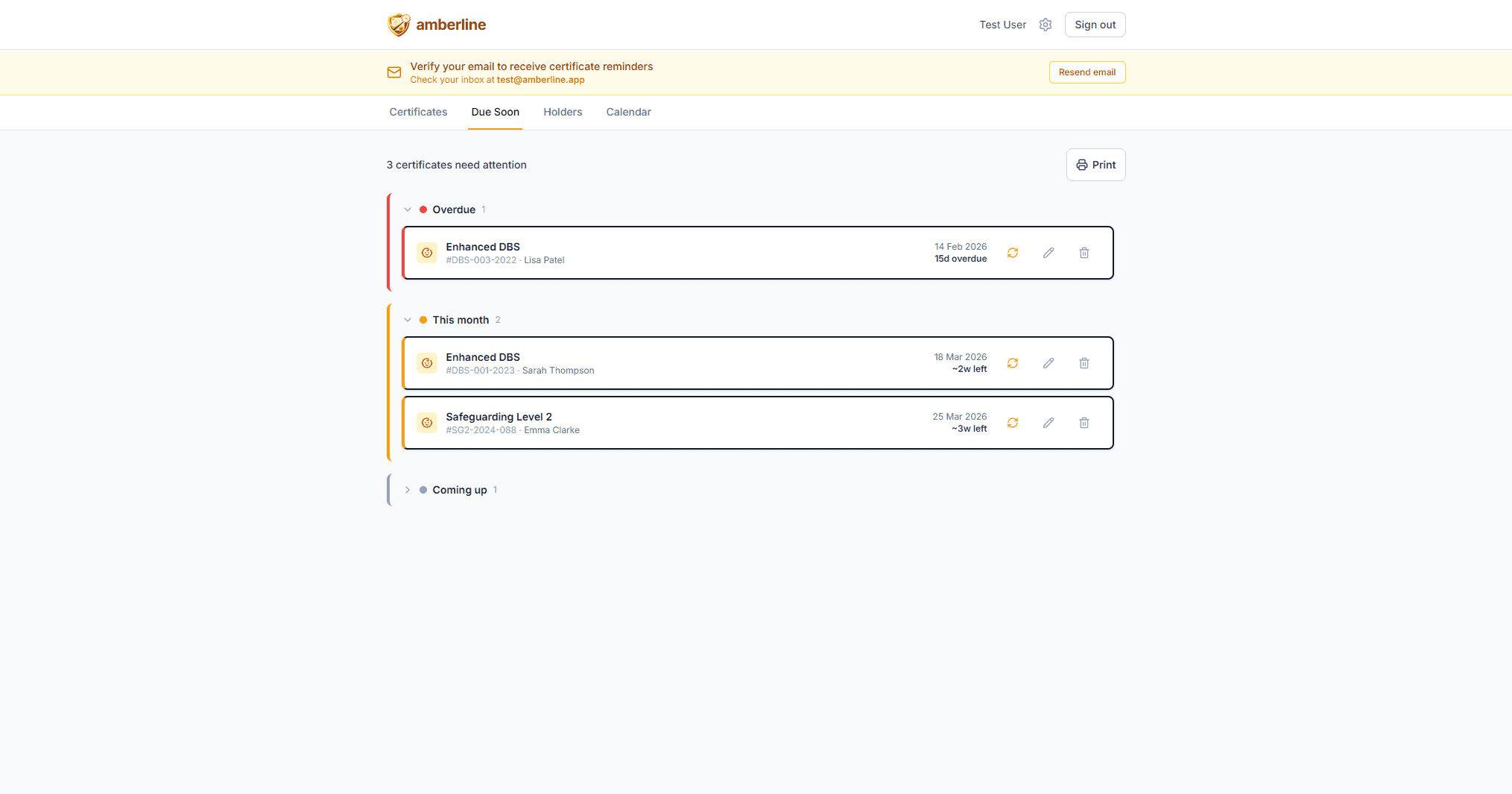
90 days is enough time to book a training course. 30 days is enough to chase a staff member who hasn't booked yet. 7 days is your last chance.
No more realising on a Monday morning that someone's first aid certificate expired last Friday.
The Ofsted-ready mindset
Being Ofsted-ready isn't about scrambling before an inspection. It's about having a system that keeps you compliant every day, so an inspection is just a formality.
That means:
- Every staff member's certificates are tracked in one place — not across email inboxes, filing cabinets, and someone's memory.
- You know what's expiring before it expires — not after a parent or inspector asks about it.
- You can show compliance instantly — pull up a dashboard, not a spreadsheet.
Amberline is free for up to 3 certificates — enough to try it with one or two staff members. For a full nursery team, the Pro plan covers unlimited certificates.
See how it works for nurseries at amberline.app/nurseries.
Ready to stop tracking certificates in spreadsheets?
Start free with up to 3 certificates. No card required.
Get started free